Home › How neurofeedback works
What is neurofeedback? How NeurOptimal® works at home
A plain-language introduction to neurofeedback, what a home session is like, and what to expect from your rental.
By Nigel Barnim, MSc Psychotherapy, Registered Psychotherapist (Qualifying), founder of Hamilton Neurofeedback
Neurofeedback in plain terms
Neurofeedback is a non-invasive, research-supported brain training tool used to help people feel and function better, and improve performance. Based on neuroplasticity and operant conditioning, it detects the electrical activity of your brain using electroencephalography (EEG) and gives you clear, immediate feedback about changes in your brain activity.
By repeatedly noticing feedback about its own activity (literally neuro-feedback), your brain makes thousands of small adjustments about what type of activity to engage in.
How NeurOptimal® works
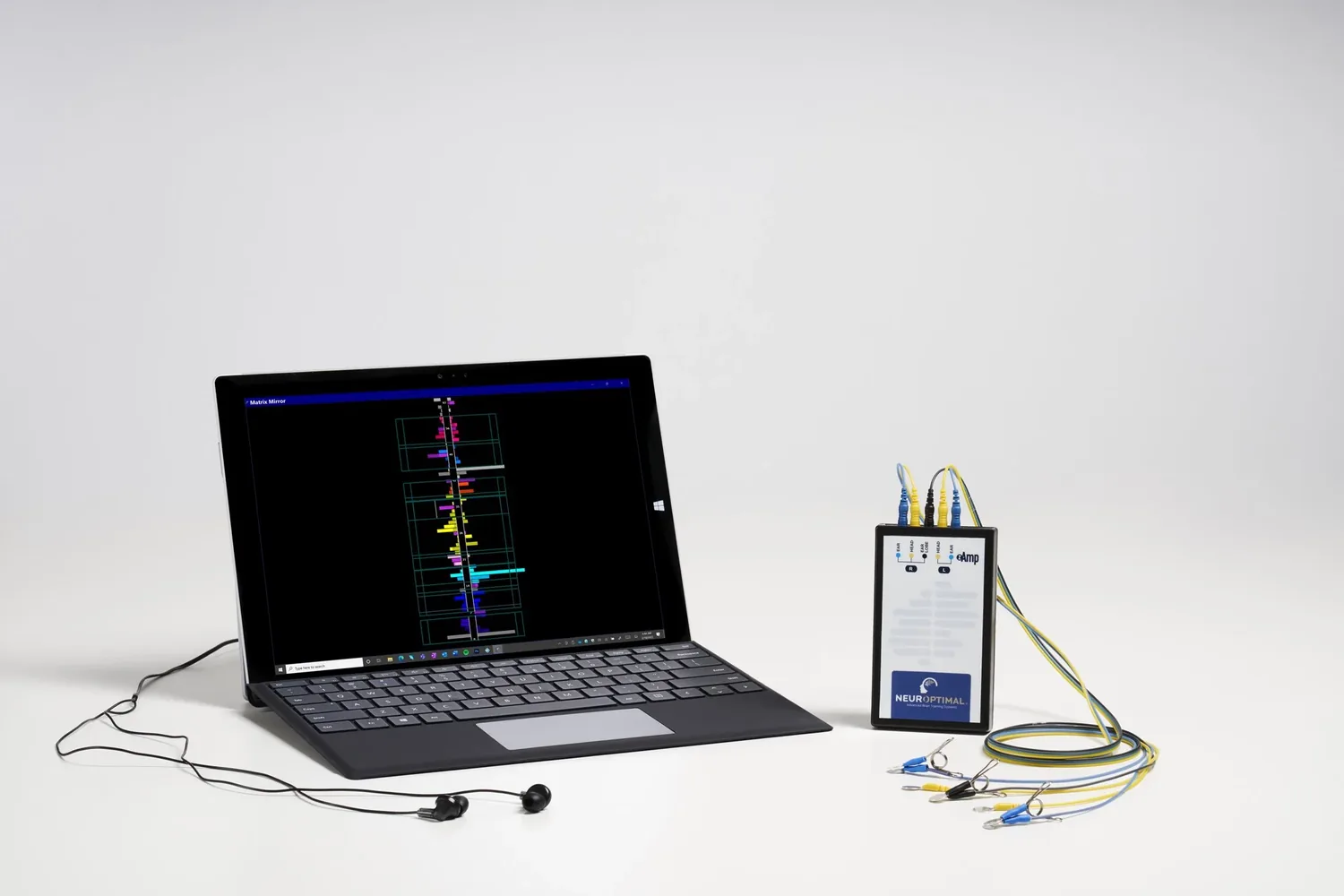
The rental system is NeurOptimal® neurofeedback. It gives feedback through sound: a small interruption in the song you're listening to each time your brain makes a rapid change in activity.
Think of it like the rumble strips on a highway. Each time your brain suddenly changes (hits the rumble strips), you get feedback, and your brain has the chance to self-correct. Over multiple sessions, your brain learns to function more effectively long-term, without the need for constant use. There's nothing to do but sit back and listen.
What a neurofeedback session at home is like
Before you start
A free phone consult answers your questions and includes a screening to make sure neurofeedback will be helpful for you. Then a free 1-on-1 setup session shows you how to run it.
During a session
Sit somewhere comfortable, clip the sensors to your ears and scalp, put on headphones and press play. Read, rest or close your eyes for about 30 minutes. Most clients find sessions calm and rejuvenating.
After a session
Most people feel relaxed, calm and clear-headed, similar to meditation. There's no homework: just notice how you feel in the days after.
What clients commonly report
- Stress reduction: relief from daily stress and tension (the most common report)
- Calmer mind: less anxiety, more relaxation, feeling more present
- Mood: a steadier, more positive mood and more resilience to stress
- Self-regulation: fewer outbursts in kids, better emotion regulation in adults
- Focus: better concentration, less distractibility
- Cognition: clearer thinking and better executive functioning
- Sleep: better sleep patterns and quality
- Performance: in sports, work and play
How long does neurofeedback take to work?
It takes about 5–10 sessions for most clients to begin noticing results. About 10% of clients notice changes right away, in the first 1–2 sessions. Early signs of response usually include feeling calm, present and less reactive to minor stressors in the 1–2 days after a session. These effects deepen and last longer over time.
A full course is often around 30 sessions, after which the brain no longer needs sessions to keep the change, though this varies from person to person. Some people like doing maintenance sessions or occasional boosters, others get lasting results in about 20. At 4–5 sessions a week, a 1‑month rental typically covers 15–20 sessions, though some clients do a session every day.
Does neurofeedback work for everyone?
Sadly not. Just like medication or psychotherapy, not everyone responds to neurofeedback. About 10% of clients notice no change. That's why every rental has a 10-session guarantee: if you notice no change after 10 sessions, return the system and we'll refund your unused rental time.
Is neurofeedback safe? Are there side effects?
Neurofeedback is generally safe and gentle, but a minority of clients have side effects. Like exercise for your brain, many people feel invigorated after their first few sessions, but some feel tired or get a headache. These usually pass as your brain adjusts. They're temporary and usually stop after a few sessions. Fewer than 1 in 10 people report any side effect.
Is neurofeedback a medical treatment?
No. There is a growing body of research on neurofeedback, but it generally falls under complementary and alternative approaches. NeurOptimal® neurofeedback in particular is a training tool and does not diagnose, treat, mitigate, prevent or cure any disease, disorder or abnormal physical state.
Learn more
- NeurOptimal® research page (choose "International" on their site)
- A Symphony in the Brain by Jim Robbins, a readable introduction to neurofeedback
- Neurofeedback in the Treatment of Developmental Trauma by Sebern Fisher
- Talks and podcasts by Nigel Barnim including the 2026 McMaster neuroscience conference
- In-clinic sessions in Hamilton
- In-clinic sessions in Burlington
Try it at home in Toronto
1-month rentals from $999 $899.10 + HST with 10% off for a limited time. Free drop-off within 5 business days, or Canada Post delivery in 1–2 business days.